Experience excellent results with Polynucleotides at L’Atelier Aesthetics at 101 Harley Street with injectable expert Dr Duncan Brennand GMC 4341662.

Polynucleotides are one of the most talked-about regenerative injectable treatments in London, known for their ability to support skin repair, hydration, elasticity and overall skin quality without adding volume in the way a dermal filler would.
At L’Atelier Aesthetics, we offer Polynucleotides from our doctor-led clinic at 101 Harley Street, London. This advanced skin treatment is designed for patients who want gradual, natural-looking rejuvenation, particularly around delicate areas such as the under eyes, face, neck and areas of crepiness, dullness or early ageing.
Unlike treatments that focus on filling, lifting or freezing movement, polynucleotides work by supporting the skin’s own regenerative processes. They are often chosen by patients who want their skin to look healthier, smoother and more resilient rather than noticeably “treated”.
L’Atelier Aesthetics is based at 101 Harley Street, in the heart of London’s medical district. Our approach to polynucleotide treatment is careful, clinical and tailored to the individual. Every plan begins with a consultation to assess your skin quality, treatment goals, medical history and whether polynucleotides are the right option for your concern.
On our main Polynucleotides page, we describe the treatment as a regenerative injectable treatment that helps restore radiance, smooth fine lines and rejuvenate the complexion. The treatment is priced from £425, with two treatments listed at £750, and is performed at our Harley Street clinic.
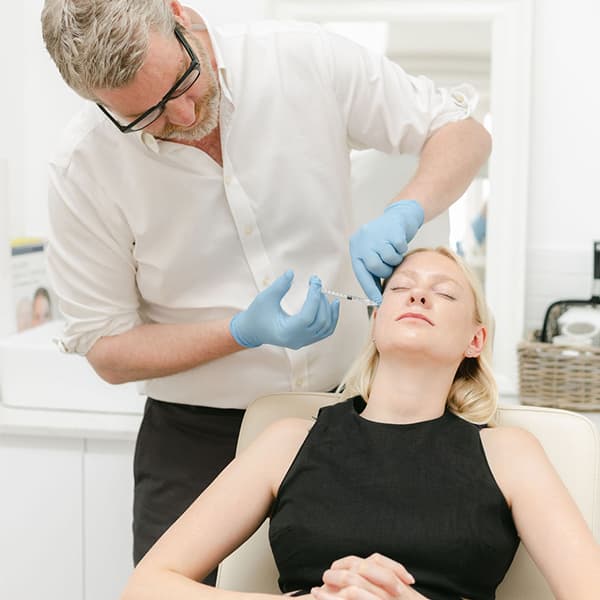
At L’Atelier, polynucleotide treatment is carried out by Dr Duncan Brennand, our lead aesthetic doctor. This is important because polynucleotides are an injectable treatment, and the quality of the result depends not only on the product used, but also on anatomical knowledge, assessment, placement and technique.
Polynucleotides are purified DNA fragments used in aesthetic medicine to support skin repair and regeneration. When injected into the skin, they help create an environment that supports fibroblast activity, collagen production, hydration and tissue repair.
In simpler terms, they encourage the skin to behave in a healthier, more regenerative way. Rather than adding structure like dermal fillers, polynucleotides are used to improve the quality of the skin itself.
This is why they are often described as regenerative injectables or bio-stimulatory skin treatments. They are particularly useful for patients who feel their skin looks tired, thin, crepey, dull or less resilient than it used to.
Patients in London are increasingly looking for treatments that improve skin quality without creating obvious volume or dramatic change. Polynucleotides fit this shift well because they focus on repair, hydration, elasticity and subtle rejuvenation.
They are especially popular with patients who want improvement around the eyes but do not want, or are not suitable for, under-eye filler. They may also appeal to patients who have already tried skin boosters but want a more regenerative approach to skin quality.
At L’Atelier Aesthetics, we often see patients from across Harley Street, Marylebone, Mayfair, Fitzrovia, Regent’s Park, Soho, Knightsbridge, Belgravia, Chelsea and Kensington, as well as patients travelling into London for specialist skin and injectable treatments. The clinic is located at 101 Harley Street, with nearby transport links including Oxford Circus, Bond Street and Regent’s Park.


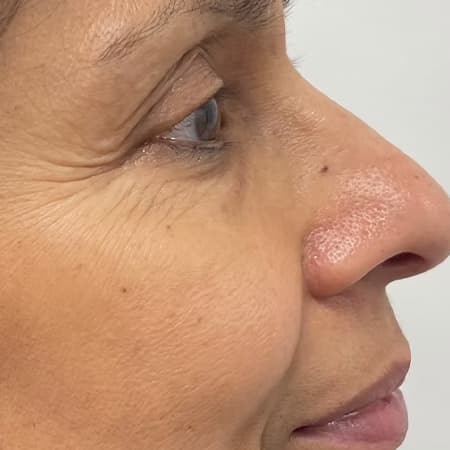
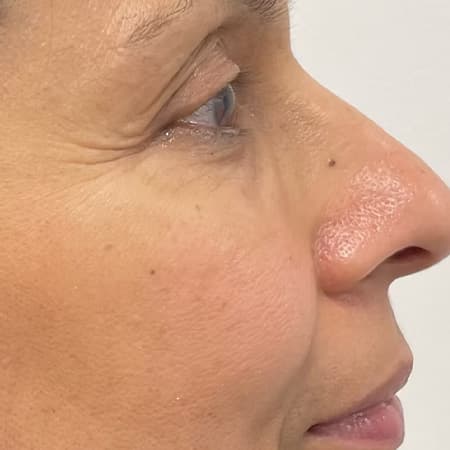
One of the most requested uses for polynucleotides is the under-eye area. The skin under the eyes is thin and delicate, which makes it more prone to crepiness, fine lines, dehydration and shadows.
Polynucleotides can be a good option for patients who want to improve under-eye skin quality without adding volume. They are not designed to replace tear trough filler in every case, but they can be particularly helpful when the concern is skin thinness, texture, fine lines or tired-looking skin.
At L’Atelier Aesthetics, polynucleotides under the eyes may be recommended where the goal is to strengthen fragile skin, improve hydration, smooth crepiness and support a fresher appearance over time. The result is gradual rather than immediate, which makes the treatment well suited to patients who prefer subtle, natural-looking improvement.
Polynucleotides and skin boosters are often discussed together because both are injectable treatments used to improve skin quality. However, they do not work in exactly the same way.
Skin boosters are typically used to improve hydration, glow and skin smoothness. They are a good option for patients whose main concern is dryness, dullness or loss of radiance.
Polynucleotides go further into the regenerative category. Rather than focusing only on hydration, they support tissue repair, fibroblast activity and longer-term skin resilience. This makes them particularly useful when the skin is thin, crepey, tired-looking or slower to recover.
For some patients, the best result may come from using both treatments within a wider plan. You can also read our comparison article, Profhilo Skin Boosters vs Polynucleotides, if you are deciding between treatment options.
Polynucleotides are not fillers. This is one of the most important distinctions for patients to understand.
Dermal fillers are used to restore volume, enhance contours, support structure or soften specific lines. They can be very effective when the issue is volume loss or facial shape. Polynucleotides work differently. They do not create the same immediate lifting or volumising effect. Instead, they support the skin’s natural repair processes, helping to improve texture, firmness, hydration and resilience gradually.
If your concern is hollowing, loss of structure or facial contour, filler may be more appropriate. If your concern is thin, tired, crepey or poor-quality skin, polynucleotides may be a better starting point. In some cases, both can be used as part of a doctor-led treatment plan.
Polynucleotides can be used on several areas where skin quality has changed. At L’Atelier Aesthetics, commonly treated areas include the under eyes, face, cheeks, neck, décolletage, hands and areas affected by acne scarring or pigmentation.
They may be suitable for:
For patients with acne scarring or texture concerns, polynucleotides may also be considered alongside treatments such as SkinPen Microneedling, microneedling or Morpheus8, depending on the depth and type of scarring.
Polynucleotides may be suitable if you are starting to notice that your skin looks thinner, duller, less elastic or less hydrated than it used to. They can also be helpful if you want improvement around the eyes but do not want filler, or if your practitioner feels filler is not the right solution for your anatomy.
They may be particularly suitable for patients looking for:
Natural-looking skin rejuvenation
Under-eye skin quality improvement
A regenerative injectable treatment
Subtle improvement without added volume
Better skin texture and elasticity
A treatment that works gradually over time
A doctor-led treatment in Central London
During consultation, Dr Duncan Brennand will assess whether polynucleotides are suitable for your skin, or whether another treatment such as skin boosters, Sofwave, Morpheus8 or bespoke skincare would be more appropriate.
Choosing where to have polynucleotides in London matters. This is an injectable treatment that requires careful patient selection, anatomical knowledge and a clear understanding of how regenerative treatments behave.
At L’Atelier Aesthetics, polynucleotide treatments are carried out at our clinic at 101 Harley Street, London. The treatment is performed by Dr Duncan Brennand, who is listed by L’Atelier as the lead aesthetic physician with expertise in polynucleotides, dermal fillers, HA injections, collagen-stimulating fillers and skin boosters.
The L’Atelier approach is subtle, medically led and focused on long-term skin quality. We do not recommend polynucleotides simply because they are popular. We recommend them when they are genuinely suitable for your skin and your goals.
You can have polynucleotides at L’Atelier Aesthetics, 101 Harley Street, London. The treatment is performed in a doctor-led clinical environment and is designed to improve skin quality, hydration, elasticity and fine lines gradually.
Yes, polynucleotides can be a good option for the under-eye area when the concern is thin skin, crepiness, fine lines or tired-looking skin. They do not add volume like filler, but they can help improve the quality and resilience of the under-eye skin over time.
No, polynucleotides and skin boosters are different. Skin boosters are mainly used to improve hydration and glow, while polynucleotides are regenerative injectables that support repair, elasticity and longer-term skin quality.
Polynucleotides are not better or worse than filler. They do a different job. Dermal fillers restore volume and structure, while polynucleotides improve skin quality, hydration and regeneration. The right option depends on your concern.
Results usually develop gradually. Some patients notice improvements in hydration and skin quality within the first few weeks, with more visible improvement in tone, texture and firmness developing after a course of treatment.
At L’Atelier Aesthetics, a course of two treatments is usually recommended, followed by maintenance depending on your skin and goals. Your exact plan will be confirmed after consultation.
Most patients tolerate the treatment well. You may feel a mild pinch or pressure during injection. Some redness, swelling, small bumps or light bruising can occur afterwards, but this usually settles quickly.
Polynucleotides may help support skin repair and quality in areas affected by acne scarring, but they are not always the main treatment for deeper scars. Depending on your skin, they may be combined with SkinPen Microneedling, microneedling or Morpheus8.
Polynucleotides may not be suitable if you are pregnant, breastfeeding, have an active skin infection, have certain allergies or have specific medical conditions. A consultation is required before treatment to confirm suitability.
Polynucleotide treatment at L’Atelier Aesthetics is performed by Dr Duncan Brennand at the clinic’s Harley Street location. The treatment plan is based on your skin quality, anatomy and aesthetic goals.
Dr Duncan Brennand is our lead Aesthetic Physician at L’Atelier with a wealth of expertise in both innovative and evidence-based treatments. He is an expert in all things Polynucleotides.

We are delighted to have over 200+ 5 star reviews. Your feedback is always important to us, as it helps us to improve our systems and processes in our continual pursuit of excellence. If you have any suggestions, comments, or concerns please get in touch.
We welcome patients from across Marylebone, Mayfair, Fitzrovia, Regent’s Park, Soho, Knightsbridge, Belgravia, Chelsea and Kensington, as well as visitors travelling to London for specialist aesthetic and skin treatments. Our location benefits from excellent transport links, with Oxford Circus only a 13 minute walk away, Bond Street and Regent’s Park Underground stations are also both within easy reach. The clinic is also conveniently accessible from major London rail stations and Heathrow, Gatwick and London City airports thanks to the Elizabeth line, making visits straightforward for both UK and international patients.
Whether you are travelling from within London or further afield, our Harley Street clinic provides a calm, professional environment for personalised aesthetic and skin health treatments in one of the capital’s most respected medical locations.