ThermaVein can leave the skin looking red or slightly marked immediately after treatment, and small scabs or crusting can sometimes develop as it heals. These changes are usually temporary and are different from permanent scarring, which is an uncommon but possible complication.
Knowing what normal healing looks like can make the recovery period much less worrying. Here, we explain the possible ThermaVein side effects, how the skin may change as it heals and when you should contact the clinic for advice.
Some redness and localised sensitivity are normal immediately after ThermaVein. You may also notice small visible marks where individual veins have been treated.
ThermaVein uses a very fine probe to deliver controlled energy to the targeted vessel. This causes a local response in both the vessel and surrounding skin, so the area isn’t necessarily going to look completely clear straight after your appointment.
Depending on the area treated and your skin, you may notice redness, warmth, slight swelling or tenderness. Small treatment points may also become visible.
These early changes don’t necessarily mean something has gone wrong. They are part of the reason it is important to understand the healing process before assessing your ThermaVein before-and-after result.
Common ThermaVein side effects are generally localised to the area that has been treated. However, the exact response varies between patients.
You may experience:
Less commonly, changes such as blistering or temporary differences in pigmentation may occur.
Your individual risk depends on several factors, including your skin, the area being treated and the vessels themselves. Appropriate assessment and treatment technique are therefore an important part of reducing avoidable risk.
Most importantly, your practitioner should explain what they expect your skin to look like afterwards. That gives you something more useful to compare your recovery against than somebody else’s photographs or ThermaVein review online.
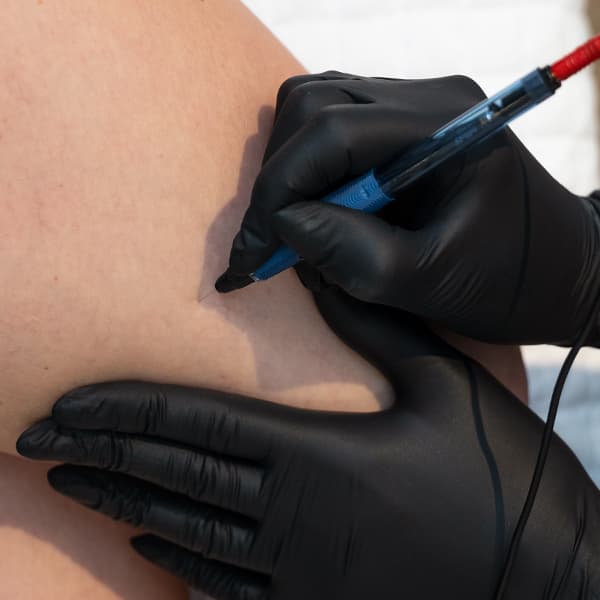
Permanent scarring after ThermaVein is uncommon, but no treatment that delivers energy into or through the skin can be described as completely risk-free.
It is also important to distinguish scarring from the temporary marks that can appear while your skin heals.
Redness immediately after treatment isn’t a scar. Neither is a small area of crusting or a scab that develops over a treatment point. These can be normal stages of healing and should gradually resolve.
Permanent scarring means a lasting change in the skin’s texture after healing is complete. Your risk can be influenced by your skin characteristics, the treatment area, the technique and settings used, and how the skin is looked after afterwards.
One of the simplest things you can do is leave healing skin alone. Picking or scratching at scabs can interrupt the natural healing process and increase the chance of a lingering mark.
If you’re worried about a mark during recovery, contact the clinic rather than trying to remove or treat it yourself.


ThermaVein recovery is usually relatively straightforward, but your skin may go through several stages before the area looks completely settled.
| Time after ThermaVein | What you may notice |
|---|---|
| First 24 to 48 hours | Redness, warmth, localised sensitivity or slight swelling may be visible. Small treatment points can also appear. |
| Days 3 to 7 | Redness should continue to settle. Small areas of crusting or scabbing may be more noticeable as the skin heals. |
| Weeks 2 to 4 | The surface of the skin should continue to calm and any temporary marks should gradually fade. |
| Later recovery | Some treated vessels may take longer to fade, so results should be assessed once the skin has healed and the treatment has had time to take effect. |
These timings are a general guide rather than a guarantee. The number of veins treated, their location and your individual skin response can all affect recovery.
Try not to judge your result while the skin is still visibly healing. A small scab or patch of redness can temporarily draw more attention to the area than the original vein did, even though it is part of the recovery process.
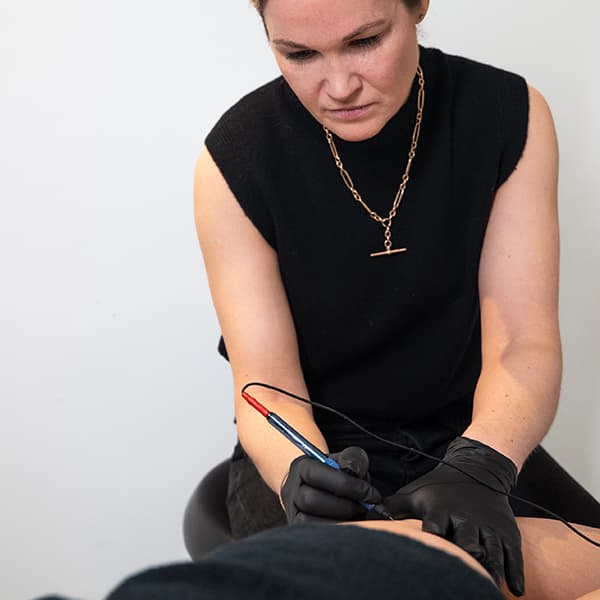
Good ThermaVein aftercare is mostly about allowing the treated skin to heal without unnecessary irritation. Avoid rubbing, scratching or picking at the area, particularly if small scabs develop. Protecting healing skin from excessive sun exposure is also important.
You may also need to temporarily adjust your skincare, make-up, exercise or exposure to heat while the area settles. Once the skin has settled, you can gradually return to your normal routine according to the advice given by your clinical team.
If you’re unsure whether the area is ready for a particular product or activity, ask the clinic rather than relying on generic ThermaVein aftercare advice online.
Several factors can affect how your skin heals and how quickly the treated area settles.
| Factor | Why it matters |
|---|---|
| Treatment area | Facial skin and body skin can respond differently, while some locations are naturally more sensitive than others. |
| The vessel itself | ThermaVein is not necessarily the right choice for every visible vein. The vessel’s size, depth and location can all influence treatment selection and response. |
| Your skin characteristics | Sensitivity and your tendency to develop pigmentation or visible marks may affect recovery. |
| Treatment technique | Energy settings and application need to be appropriate for both the vessel and the surrounding skin. |
Finally, what you do afterwards matters. Following your aftercare advice and resisting the temptation to pick at healing skin gives the area the chance to recover undisturbed.
If you’d like to understand why these vessels appear in the first place, our guide to what causes thread veins explains them in more detail.

Contact the clinic if your recovery is becoming worse rather than gradually improving, or if something doesn’t match what you were told to expect.
Some redness, sensitivity and small areas of crusting can occur as the skin heals. However, increasing pain, worsening or spreading redness, blistering, discharge or other unexpected changes should be assessed.
You should also get in touch if a mark isn’t healing as expected or you’re concerned about possible scarring.
There is no need to decide for yourself whether a reaction is “bad enough” to warrant a call. If you’re worried about your recovery, the clinical team can tell you whether what you’re seeing is expected or whether they would like to review the area.
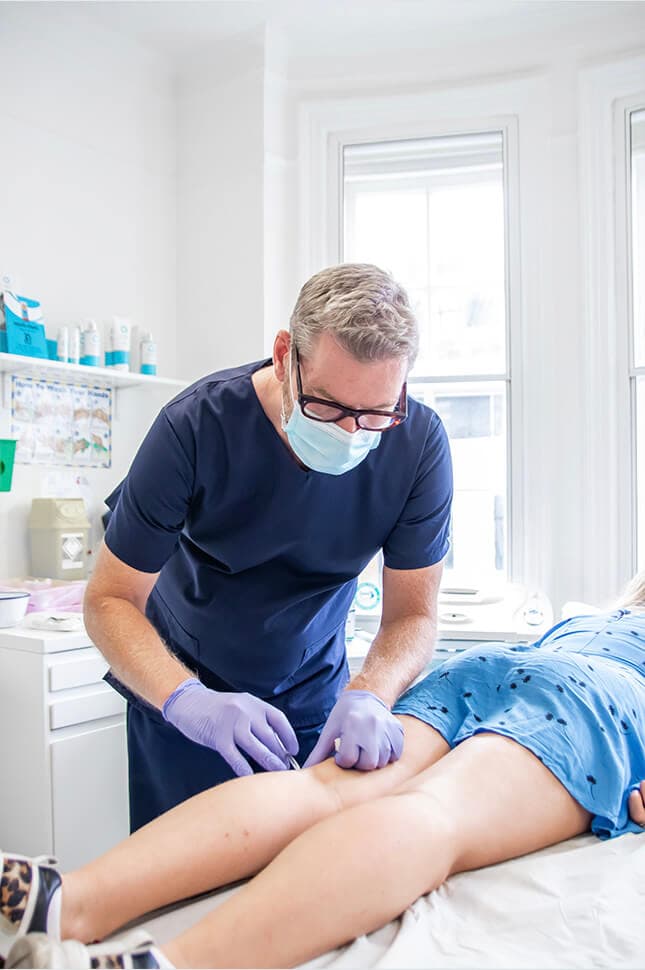
No. ThermaVein isn’t automatically the best treatment for every visible thread vein.
The size, depth and location of the vessel all influence which treatment is most appropriate. Fine superficial vessels may require a different approach from larger or deeper veins, particularly on the legs.
This is why assessment before treatment matters. Choosing the right method for the vessel is more important than choosing a treatment simply because you have seen good before-and-after photographs of it.
If you’re deciding between options, our ThermaVein vs microsclerotherapy guide explains the differences in more detail without assuming that one treatment is universally better.
Permanent scarring after ThermaVein is uncommon, although it is a possible risk. Temporary redness, small marks, crusting or scabs during recovery are not the same as permanent scars. Appropriate treatment technique and aftercare both matter, so contact the clinic if you’re worried about how an area is healing.
Small scabs or areas of crusting can develop where the skin has been treated. If this happens, avoid picking or scratching them. Allowing the skin to heal naturally reduces unnecessary irritation and the risk of lingering marks.
Redness is usually an early, temporary response to treatment and should gradually settle as the skin recovers. Exactly how long it lasts varies with your skin and the area treated. Contact the clinic if redness is worsening rather than improving or lasts longer than you were advised to expect.
Initial redness and sensitivity may settle relatively quickly, while small scabs or treatment marks can take longer. The vessels themselves may also continue to fade after the surface of the skin has healed. Your practitioner can advise when it is appropriate to judge your final result.
A successfully treated vessel may no longer be visible, but ThermaVein cannot prevent new thread veins from developing in the future. Genetics, ageing and other factors can continue to influence their formation.
This depends on L’Atelier’s aftercare protocol and how the treated skin looks after your appointment. Follow the advice given by your clinical team and avoid applying products over skin that is still visibly irritated or healing.
The most useful thing you can do after ThermaVein is give your skin time to heal. Temporary redness, treatment marks or small scabs can look more noticeable before they fade, so don’t assume that what you see during the first few days represents your final result.
Follow the aftercare advice you are given, leave any crusting or scabs alone and contact the clinic if something doesn’t look or feel as expected.
At L’Atelier Aesthetics, Dr Duncan Brennand can assess your thread veins and determine whether ThermaVein is appropriate before treatment goes ahead. You’ll also know what to expect during recovery, including which changes are normal for your skin and when the team would want to review the results.
We welcome patients from across Marylebone, Mayfair, Fitzrovia, Regent’s Park, Soho, Knightsbridge, Belgravia, Chelsea and Kensington, as well as visitors travelling to London for specialist aesthetic and skin treatments. Our location benefits from excellent transport links, with Oxford Circus only a 13 minute walk away, Bond Street and Regent’s Park Underground stations are also both within easy reach. The clinic is also conveniently accessible from major London rail stations and Heathrow, Gatwick and London City airports thanks to the Elizabeth line, making visits straightforward for both UK and international patients.
Whether you are travelling from within London or further afield, our Harley Street clinic provides a calm, professional environment for personalised aesthetic and skin health treatments in one of the capital’s most respected medical locations.