Julaine is generally better suited to patients looking to improve skin quality, elasticity and mild to moderate structural support with a shorter treatment course. Sculptra is often preferred when significant facial volume loss is the primary concern.
Both produce gradual, natural results over several months. The right choice for you depends on your anatomy, skin quality, and what you are trying to achieve – something Dr Brennand assesses at consultation.
Authored and reviewed by Dr Duncan Brennand, Lead Aesthetic Doctor, L’Atelier Aesthetics, Harley Street
The table to the side sets out the key differences between Julaine and Sculptra at a glance at a glance:
| Julaine | Sculptra | |
|---|---|---|
Mechanism | PCL microspheres | PLLA microparticles |
Stimulates | Collagen + elastin | Primarily collagen |
Sessions | 1-2 | 3 |
Onset | 4-8 weeks | 3-6 months |
Longevity | Up to 24 months | Up to 24-36 months |
Downtime | Minimal plus massage protocol | Minimal |
Best for | Skin quality + support | Volume loss |
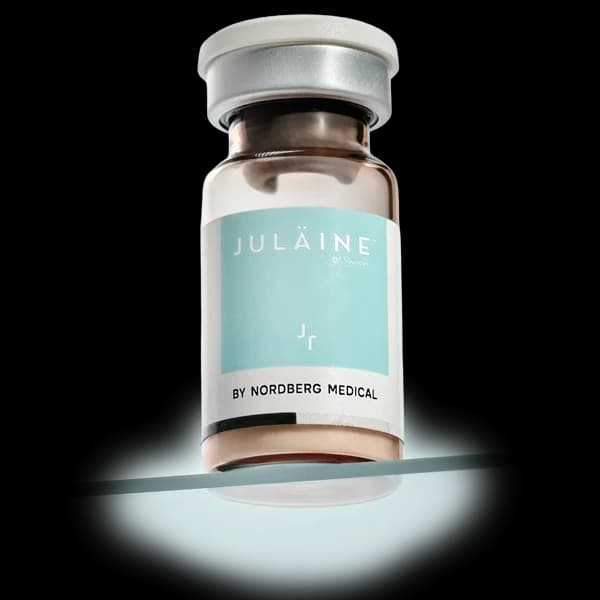
Julaine (sometimes written Juläine) is a polycaprolactone (PCL) collagen biostimulator injected as microspheres suspended in a hyaluronic acid gel carrier. Unlike traditional dermal fillers, it does not simply add volume – it triggers the body’s own collagen and elastin production over the weeks and months that follow. The result is a gradual improvement in skin firmness, texture, and structural support rather than an immediate volume effect. For full protocol details, visit the Julaine treatment page.
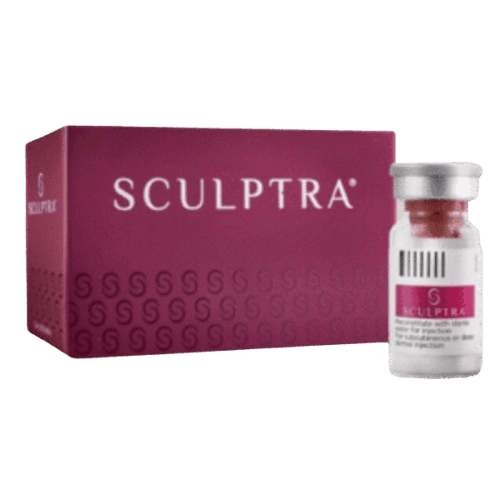
Sculptra is a poly-L-lactic acid (PLLA) biostimulator with a long clinical track record, having been used in aesthetic medicine for over two decades. Injected as a diluted solution of PLLA microparticles, it stimulates collagen production through a controlled inflammatory response in the tissue. Results emerge slowly over three to six months, and the treatment is typically delivered across three sessions spaced four to six weeks apart. Its particular strength lies in restoring lost volume in the mid-face and cheeks, making it a well-established choice for patients with significant facial hollowing or volume depletion.

Onset speed
Julaine’s PCL microspheres tend to produce a slightly earlier visible improvement than Sculptra’s PLLA, with many patients noticing a change in skin quality from around four to eight weeks. Sculptra’s collagen response takes longer to become apparent, with full results often not visible until three to six months after the final session. Neither treatment delivers immediate results – both are building something rather than filling something – but Julaine’s timeline is generally shorter.
Tissue quality versus volume
This is arguably the most clinically significant distinction. Julaine’s dual action on both collagen and elastin means it addresses skin quality – firmness, elasticity, texture – alongside mild to moderate structural support. Sculptra’s mechanism skews more towards volumetric replacement, which makes it particularly effective when facial hollowing and fat-pad loss are the dominant concerns. Clinically, patients with mid-face laxity and general skin quality concerns may be better candidates for Julaine, whereas patients with more significant volume loss in the cheeks or temples may be better suited to Sculptra. The two treatments are not mutually exclusive, and a combined approach is sometimes appropriate when both tissue quality and volume are in play.
Treatment areas
Both treatments can be used across the mid-face, cheeks, temples, and jawline. Julaine’s HA carrier allows for more precise placement and is generally well-suited to areas where a degree of immediate tissue support is beneficial alongside the longer-term biostimulation. Sculptra’s dilute suspension requires a careful injection technique and a post-treatment massage protocol to ensure even distribution and minimise the risk of nodule formation – a consideration that is worth discussing with your treating clinician.
Cost comparison
Sculptra is typically priced per session across a three-session course, with London clinic rates generally ranging from around £600 to £900 per session – meaning the full protocol investment is broadly comparable to a two-vial Julaine treatment at many clinics. The number of vials or sessions required for each patient varies based on the area being treated and the degree of correction needed, so a direct like-for-like price comparison is rarely straightforward. For L’Atelier Aesthetics’ current prices, please refer to the pricing page or the Julaine treatment page directly. Prices are maintained there and updated as required – quoting a figure in a blog post creates the risk of it becoming outdated.

Candidacy for either treatment depends on a clinical assessment. As a general guide:
The most reliable way to determine which approach suits your anatomy is through a consultation with Dr Brennand, who will assess your skin quality, facial structure, and treatment goals before recommending a plan. Consultations can be arranged via the contact page.

Patients researching Julaine and Sculptra will often come across Profhilo and wonder where it sits in the comparison.
The simplest way to think about the three treatments is as a spectrum of action: Profhilo works primarily on skin hydration and has a mild, indirect biostimulatory effect – it is an outstanding treatment for skin quality and is particularly well suited as a foundation treatment or for patients in their mid-thirties who are beginning to notice a change in skin texture and radiance. Then, Julaine adds a meaningful structural and elastin-stimulating component on top of biostimulation, while Sculptra addresses the deeper level of volume replacement.
Many patients benefit from a combination of two or all three at different points in their treatment journey, and Dr Brennand’s approach at L’Atelier is to design a plan based on what your skin genuinely needs rather than defaulting to a single intervention.
You may also find it useful to read our comparison of Profhilo vs polynucleotides, which covers another commonly compared pairing in the skin booster category. Our polynucleotides page has further detail for patients considering that option.
Neither treatment is universally better – they are designed to address different concerns. Julaine’s dual collagen and elastin stimulation makes it particularly effective for patients focused on skin quality and early to moderate laxity, with a shorter course and faster onset. Sculptra’s strength lies in restoring more significant volume loss, particularly in the cheeks and temples, over a three-session programme. Your clinician’s assessment of your anatomy and goals is the most reliable basis for the decision.
Julaine results typically last up to 24 months. Sculptra’s collagen stimulation can persist for up to 24 to 36 months, though longevity varies between patients depending on skin type, lifestyle, and the volume of product used. Both treatments produce results that diminish gradually rather than abruptly, and maintenance sessions can be planned accordingly.
The overall cost depends on how many vials or sessions each individual requires, which varies by anatomy. In broad terms, a Julaine treatment requiring one or two vials and a Sculptra course of three sessions are often in a comparable price range – but the only way to get an accurate comparison is to discuss your specific requirements at consultation. Current L’Atelier prices for Julaine are on the treatment page; we do not publish fixed prices in blog content as they are updated regularly.
Yes, and it is not uncommon for patients who have previously had Sculptra to transition to Julaine – for instance, because they want to maintain their results with fewer sessions, or because their goals have shifted from volume replacement towards skin quality improvement. Dr Brennand will take a full treatment history at consultation and factor in any previous biostimulator treatments when planning the next phase of care.
We welcome patients from across Marylebone, Mayfair, Fitzrovia, Regent’s Park, Soho, Knightsbridge, Belgravia, Chelsea and Kensington, as well as visitors travelling to London for specialist aesthetic and skin treatments. Our location benefits from excellent transport links, with Oxford Circus only a 13 minute walk away, Bond Street and Regent’s Park Underground stations are also both within easy reach. The clinic is also conveniently accessible from major London rail stations and Heathrow, Gatwick and London City airports thanks to the Elizabeth line, making visits straightforward for both UK and international patients.
Whether you are travelling from within London or further afield, our Harley Street clinic provides a calm, professional environment for personalised aesthetic and skin health treatments in one of the capital’s most respected medical locations.