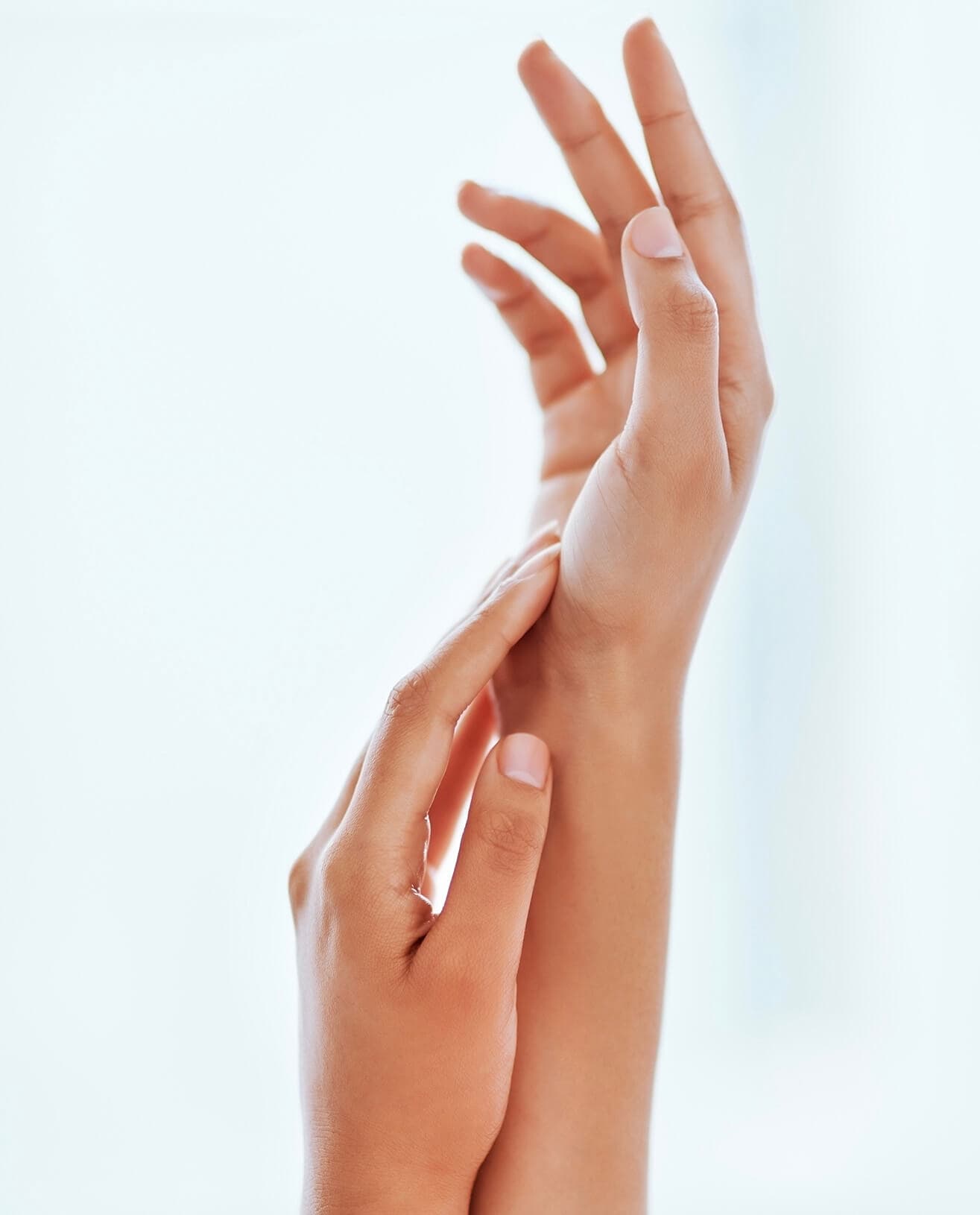
Our hands are constantly in use, which means they recover a little differently from the face after aesthetic treatment. Between washing, typing, driving and everyday tasks, giving them complete rest simply isn’t realistic.
The good news is that recovery after hand rejuvenation is usually straightforward. Understanding what to expect at each stage, and how to care for your hands while they settle, can help make the process feel much more predictable and reassuring.
This guide explains what typically happens after treatment, offers practical aftercare advice and outlines when you can expect to see your final result.
Hand rejuvenation at L’Atelier Aesthetics is always planned around the individual, and the approach chosen shapes what the first day looks like. The hands can be treated with dermal fillers, with a collagen-stimulating skin booster, with an energy-based device, or with a combination, and each has a slightly different recovery pattern. Because of that, the notes here describe the general shape rather than a fixed schedule.
Before you leave the clinic, Dr Brennand and the team will explain exactly what to expect from your treatment, talk you through your personalised aftercare instructions and answer any questions you may have about the recovery process.
Recovery after hand rejuvenation follows a number of recognisable stages, although the exact timeline depends on the treatment you’ve had. The guide below provides a general overview of what most patients can expect. During your consultation, Dr Brennand will explain the recovery pattern specific to your treatment.
Your hands are used constantly throughout the day, so they may take a little longer to feel completely back to normal than other treated areas. This doesn’t necessarily mean anything is wrong. Your practitioner will explain what is expected for your treatment and when to contact the clinic if you have any concerns.
Hand aftercare differs from facial aftercare for one simple reason: your hands are almost impossible to rest completely. They’re washed repeatedly throughout the day, exposed to the elements and used constantly for everyday tasks.
Good aftercare takes that reality into account. Rather than expecting you to avoid using your hands altogether, the aim is to protect the treated area while allowing you to continue with normal daily life as comfortably as possible. Here are some guidelines?
Most people recover without any problems. Occasionally, however, you may notice something that feels different from what you were expecting. If that happens, it’s always better to contact the clinic than to try to assess it yourself.
As a general rule, if anything worries you or does not seem to be settling as it should, contact the clinic rather than trying to judge it yourself. We would always rather hear from you.

When thinking about recovery, it helps to separate two different milestones: recovering from the treatment and seeing your final result.
Recovered means the day-to-day after-effects of treatment have passed and your hands feel normal again. Settled means the result itself has fully developed, which usually takes longer, particularly with treatments that work by encouraging your own skin to renew over time.
For more on the changes that affect the hands over time, our guide to handling ageing hands is a useful companion piece. Dr Brennand will set out a realistic timeline at your consultation and arrange a review so progress can be checked.

Recovery is usually straightforward, though the exact timeline depends on the treatment used. Dr Brennand will give you a clear idea of what to expect for your treatment at your consultation.
In general, some short-lived after-effects can be part of normal recovery, and anything that concerns you is always worth raising with the clinic.
You will need to keep washing your hands, so gentle washing is usually fine unless you are told otherwise.
Recovered and settled are not the same thing. Your hands will feel normal again well before the result has fully developed
Protecting the backs of the hands from the sun is sensible both while you recover and as an ongoing habit, since they are exposed to daylight constantly.
This depends on the treatment and on how your skin responds over time.
We welcome patients from across Marylebone, Mayfair, Fitzrovia, Regent’s Park, Soho, Knightsbridge, Belgravia, Chelsea and Kensington, as well as visitors travelling to London for specialist aesthetic and skin treatments. Our location benefits from excellent transport links, with Oxford Circus only a 13 minute walk away, Bond Street and Regent’s Park Underground stations are also both within easy reach. The clinic is also conveniently accessible from major London rail stations and Heathrow, Gatwick and London City airports thanks to the Elizabeth line, making visits straightforward for both UK and international patients.
Whether you are travelling from within London or further afield, our Harley Street clinic provides a calm, professional environment for personalised aesthetic and skin health treatments in one of the capital’s most respected medical locations.