
Written by the team at L’Atelier Aesthetics, checked by Dr Duncan Brennand, Lead Aesthetic Doctor, 101 Harley Street
IV vitamin infusions have become a fixture on the London wellness circuit. The market covers claims ranging from hangover recovery to skin quality to immune support, and the standard of clinical oversight behind those claims varies considerably.
Some of the applications are well supported. Others sit well ahead of the evidence. At L’Atelier Aesthetics, 101 Harley Street, IV drips are prescribed when there is a genuine clinical reason for them and not recommended when there is not. This guide sets out all about our IV drips: how we approach them, what we offer, what we decline to offer, and how to determine whether an IV drip is actually the right choice for your circumstances.
For most patients at the clinic, the appropriate starting point is a general replenishment drip covering hydration, electrolytes and the key vitamins most Londoners run marginally low on. For patients with documented iron deficiency, the Iron Clinic is a separate specialist service with its own clinical pathway.

An IV drip delivers fluid, electrolytes and a defined dose of vitamins directly into the bloodstream over 30 to 60 minutes. The practical advantage over oral supplementation is that it bypasses the digestive system, which can limit absorption in some individuals and for some nutrients. In practice, how meaningful that difference is depends on the specific vitamin and where the patient is starting from.
For hydration and electrolyte correction, an IV drip does what it describes. For broader wellness claims, the evidence is considerably thinner, and that is worth being clear about before booking.
Common ingredients include saline fluid, B vitamins, vitamin C, magnesium, calcium and sometimes glutathione. What matters more than the specific formulation is that the drip is medically prescribed and administered in a properly clinical setting by a trained practitioner. An IV procedure carries real, if small, risks of infection at the insertion site, bruising and allergic reaction. It should not be treated as a routine wellness top-up without clinical oversight.

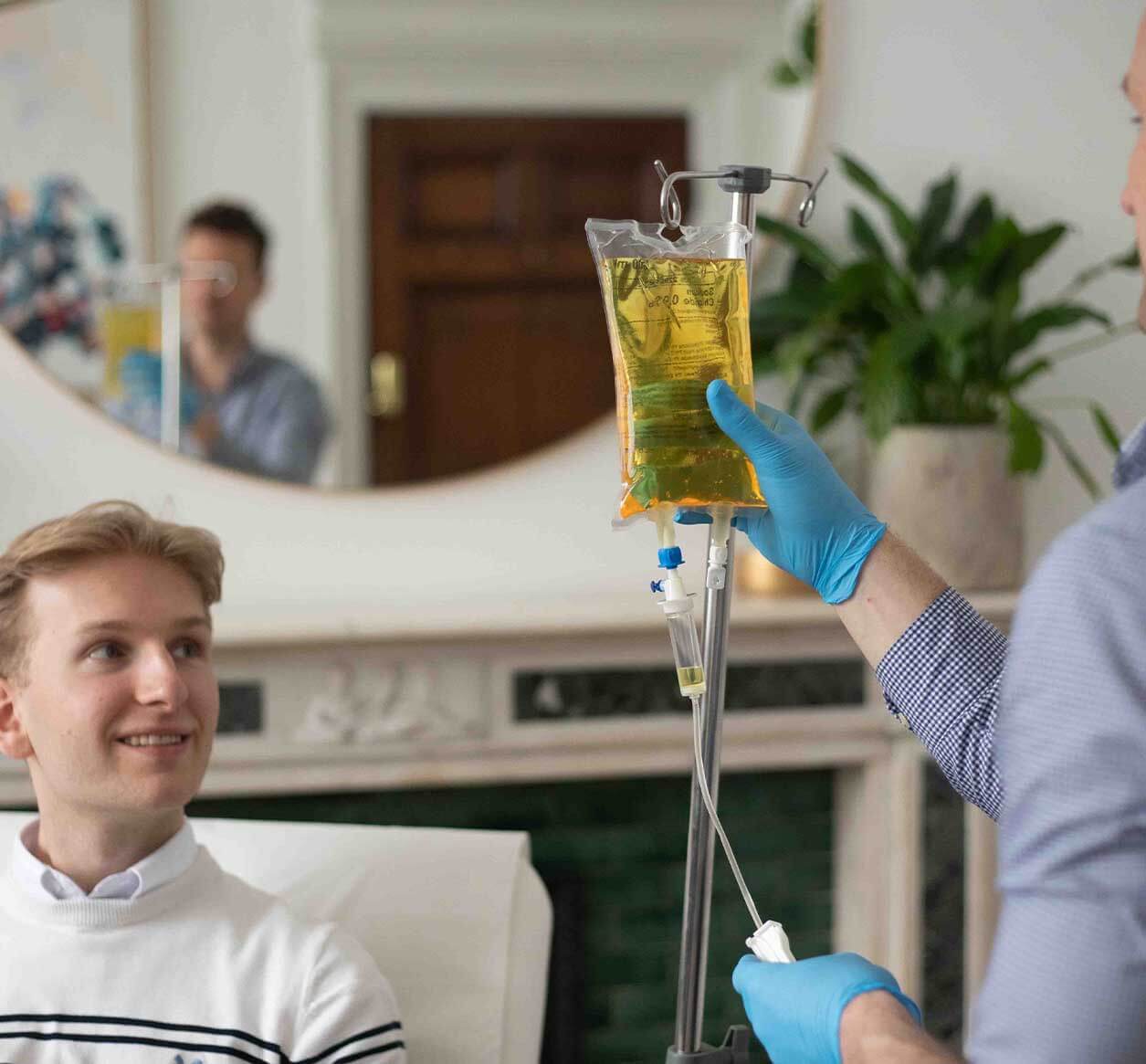
IV drips can be a valuable option for patients who want targeted nutritional support delivered directly into the bloodstream. They are often chosen by people who feel run down, are recovering from a demanding period, or want additional support for energy, hydration, skin quality and general wellbeing.
At L’Atelier Aesthetics, IV drips are best suited to patients who have a clear reason for treatment. This may include people with low iron or B12 who do not absorb oral supplements well, patients preparing for or recovering from a significant physical event, or those who experience lower vitamin D levels during the winter months. They can also be used alongside skin quality treatments to support the body from within, helping to complement a wider plan focused on healthy, refreshed and resilient skin.
IV drips are not a replacement for a balanced diet, medical care or injectable and device-based treatments. However, when used appropriately and recommended following consultation, they can form a useful part of a personalised wellness and aesthetic treatment plan.
| IV drips may not be suitable for | Why clinical review is important |
|---|---|
| Patients who are pregnant | Pregnancy changes fluid balance, circulation and nutritional requirements, so IV treatment should only be considered with specific medical input. |
| Patients with vein or circulation problems | IV treatment requires safe venous access. A prior clinical review helps assess whether treatment is appropriate and comfortable. |
| Patients with kidney conditions | The kidneys help regulate fluid and electrolyte balance. Specialist clearance may be needed before introducing IV fluids or nutrients. |
| Patients with cardiac conditions | IV infusions can affect fluid load and circulation, so patients with heart conditions should only proceed with appropriate medical clearance. |
Our IV menu is designed to offer targeted support rather than a one-size-fits-all approach. Each drip is selected following consultation, with the aim of matching the infusion to the patient’s needs, lifestyle, symptoms and wider treatment plan.
Some patients benefit from a general replenishment drip when they feel run down, dehydrated or in need of a wellness reset. Others may require a more specific infusion, such as iron, where treatment is only appropriate after blood testing and clinical review. IV drips can also be used to support patients around periods of increased physical demand, travel, fatigue, winter vitamin depletion or as part of a broader skin and wellbeing plan.
The table below outlines the main IV options available at L’Atelier Aesthetics, what each one is designed to support, and the type of patient it may be appropriate for.
| Drip | What it covers | Who it suits |
|---|---|---|
General replenishment | Hydration, electrolytes, B vitamins and vitamin C. Around 45 minutes per session. | Patients wanting a general top-up rather than targeting a specific deficiency. |
Iron infusion (Iron Clinic) | Specialist iron infusion, confirmed by blood test with full medical oversight. Not a menu drip. | Patients with documented iron deficiency only. Referred through the Iron Clinic. |
The response to an IV drip depends on the type of infusion used, the patient’s starting point and whether there is a genuine deficiency being corrected. At L’Atelier Aesthetics, we take a measured approach to IV therapy, so expectations are always guided by clinical suitability rather than exaggerated wellness claims.
For replenishment drips, the hydration and electrolyte benefits are usually felt quickly. Many patients feel more refreshed, rehydrated or generally restored soon after treatment, with effects typically lasting around 24 to 48 hours.
Vitamin-based IV drips work differently. The most noticeable improvements are usually seen in patients whose levels were low to begin with. If a patient is genuinely deficient in a vitamin, they may notice a clearer improvement in energy, wellbeing or recovery over the following one to two weeks. If vitamin levels are already adequate, the change is likely to be more subtle. This is why consultation and, where appropriate, blood testing are important: the benefit of treatment is strongest when we are correcting something the body actually needs.
Iron infusions are managed with a more clinical approach. Where iron deficiency has been confirmed, patients may begin to notice improvements in energy, stamina and mental clarity within two to four weeks. Results can last for several months, although this depends on the dose given, the severity of the deficiency and the reason iron levels were low in the first place.

The benefit of an IV drip is that it gives us a direct way to support hydration, replenishment and recovery. For the right patient, it can be a useful boost during periods of fatigue, after a demanding schedule, before an important event, or when we are correcting something specific such as low iron, B12 or vitamin D. Used thoughtfully, IV therapy can help patients feel more refreshed, supported and better prepared as part of their wider wellness or skin quality plan.
For most patients, the general IV replenishment drip covering hydration, electrolytes and key vitamins is the right starting point. For documented iron deficiency, we refer patients to our Iron Clinic, which is a separate specialist service.
A standard replenishment drip takes around 45 minutes. Iron infusions typically take 60 to 90 minutes. Patients can read or work during the session.
IV drips are prescribed by Dr Brennand and administered by trained clinical staff. They carry small but real risks of infection, bruising at the needle site and allergic reaction, which are discussed at consultation. We decline to treat where the risk does not justify the benefit.
They work for defined purposes: hydration, electrolyte correction and addressing documented deficiencies. They do not have strong evidence for general wellness claims in otherwise healthy adults. We are happy to discuss that openly at consultation.
No. IV drips are not given during pregnancy without specific medical input. Iron infusions in pregnancy, where needed, are typically arranged through an antenatal service.
We recommend IV drips when there is a specific reason, such as recovery, a documented deficiency or preparation for an event. Routine monthly infusions for most healthy adults are not necessary and are not a good use of money. Dr Brennand will give a straightforward answer at consultation.
We welcome patients from across Marylebone, Mayfair, Fitzrovia, Regent’s Park, Soho, Knightsbridge, Belgravia, Chelsea and Kensington, as well as visitors travelling to London for specialist aesthetic and skin treatments. Our location benefits from excellent transport links, with Oxford Circus only a 13 minute walk away, Bond Street and Regent’s Park Underground stations are also both within easy reach. The clinic is also conveniently accessible from major London rail stations and Heathrow, Gatwick and London City airports thanks to the Elizabeth line, making visits straightforward for both UK and international patients.
Whether you are travelling from within London or further afield, our Harley Street clinic provides a calm, professional environment for personalised aesthetic and skin health treatments in one of the capital’s most respected medical locations.